Package Description
With Panelists: Carol G. Velandia, Maria-Paz Beltran Avery, and Michael Mulé, and Moderator/Panelist: Jaime Fatás Cabeza
Continuing Education Approval: CCHI 2.0 hours, IMIA/NBCMI 0.2 CEUs, RID 0.2 CEUs
This roundtable webinar equips interpreter trainers to teach advocacy as both an ethical obligation and a professional skill grounded in real-world practice. Drawing on the NCIHC Code of Ethics (2004), Standards of Practice (2005), and recent developments—including Interpreter Advocacy in Healthcare Encounters: A Closer Look (2021) and the ongoing Code revision(both available for review at the NCIHC’s website), panelists will clarify when advocacy is appropriate, particularly as a last-resort intervention in situations involving risk of harm.
Beyond the clinical encounter, the session also situates advocacy within a broader human rights and language access framework, highlighting how government policy and systemic factors shape interpreter roles and responsibilities. Participants will examine how advocacy differs from other interventions, such as ensuring accuracy or providing cultural or contextual information, and will engage with structured approaches to ethical decision-making.
Part of a series designed specifically for trainers, the webinar emphasizes how to translate these concepts into teachable, practical components of interpreter education. Panelists will share strategies for integrating advocacy, ethics, and policy into curricula, along with exercises that build critical thinking and professional judgment—including in remote interpreting contexts.
The session will also expand the scope of advocacy to include escalation strategies, institutional accountability, collaboration with healthcare teams, and advocacy for the interpreting profession itself, including recognition, respect, and sustainable working conditions.
Learning Objectives:
- Understand advocacy as both an ethical and human rights–based concept, and assess how NCIHC standards, government policy, and language access frameworks shape interpreter roles, responsibilities, and professional boundaries.
- Differentiate advocacy from other interpreter interventions and apply structured decision-making frameworks to determine when advocacy is ethically justified, including in situations involving physical or emotional harm and in remote interpreting contexts.
- Design and implement strategies that integrate advocacy into interpreter education, including curriculum development, practical exercises, escalation strategies, and approaches that support interdisciplinary collaboration and professional recognition.
About the Panelists:
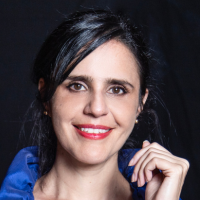
Carol G. Velandia P. MBA, MSW, CHI, PMP
Carol Velandia is a language access advocate, educator, and social worker with over a decade of experience in interpretation, consulting, and training. She is the founder and CEO of Equal Access Language Services and the creator of the “Effective Inclusion Through Language Access” (EITLA) program. Carol partners with organizations to design and implement system-level language access solutions that improve equity, quality of care, and communication outcomes. As an immigrant and former LEP individual, her work is grounded in lived experience and a deep commitment to eliminating language-based discrimination. She is also a graduate professor at the University of Maryland, where she teaches negotiation, conflict resolution, and language access.

Maria-Paz Beltran Avery, PhD
Maria-Paz Beltran Avery began her work on healthcare interpreting in the early 1990’s directing a federally funded project to develop a college level certificate program to train bilingual adults as healthcare interpreters. Through this project, she collaborated with the Massachusetts Medical Interpreters Association (MMIA) in developing the Medical Interpreting Standards of Practice (1996). She participated in and facilitated national meetings focused on healthcare interpreting that became the National Council on Interpreting in Health Care (NCIHC). As a member of the NCIHC’s Standards, Training and Certification Committee, she contributed to the development of the National Code of Ethics (2004), the National Standards of Practice (2005), and the National Standards for Healthcare Interpreter Training Programs (2011). She co-wrote the whitepaper "Interpreter Advocacy in Healthcare Encounters: A Closer Look" and currently serves on the NCIHC’s National Ethics and Standards Work Group.
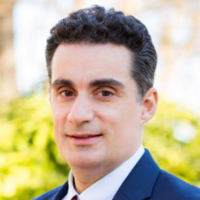
Michael Mulé, Civil Rights Attorney and Language Access Expert
Michael Mulé is an attorney with twenty years of experience advancing the rights of people who communicate in non dominant languages. For fifteen years, he enforced Title VI and other civil rights laws at the U.S. Department of Justice in the Civil Rights Division (CRT) and the Office of Justice Programs. At CRT, he led the language access courts team, filed the first language access statement of interest in a federal lawsuit, and administered LEP.gov. Before DOJ, he expanded access to public services for low income Deaf and Spanish speaking clients. He now provides consulting on civil rights and language access.
About the Moderator:

Jaime Fatás-Cabeza, MA, USCCI
Jaime Fatás-Cabeza is an Associate Professor in the Spanish Department at the University of Arizona, a U.S. Court Certified Interpreter, and a healthcare interpreter with over 30 years of expertise. Jaime has trained hundreds of interpreters, developed specialized legal and medical curricula, and authored and translated a wealth of academic and professional texts spanning diverse subjects. Jaime is a member of the editorial board of NCIHC’s Access journal and serves on the NCIHC’s Home for Trainers Webinars Work Group. Proudly an immigrant and an impassioned advocate for civil rights, Jaime’s work is a testament to his unwavering commitment to equity, diversity, and inclusion.
This live webinar took place on May 18, 2026.
Register to view this webinar recording by clicking here.
NCIHC Members: FREE
Non-NCIHC Members: $30.00 Become an NCIHC Member today!
For Distributors
Distributors may purchase multiple copies of packages to distribute to learners, and follow their progress. Bulk discounts are below.
| Quantity | Price per voucher |
|---|---|
| 1+ | $0.00 |